Wednesday, 13 November 2019

Languages in RPGs are never fun

A lot of RPGs, from Dungeons and Dragons, through Chronicles of Darkness to Stars Without Number just to name a handful, feature a language mechanic of some sort. Unfortunately, those mechanics usually don't add much to the game.

How languages usually play out


The main problem with the language mechanics is that they usually clash with two unspoken rules of role play games - keep the plot moving (aka, don't grind the game to a halt because the players can't figure something or don't have something they need, the idea behind concepts like fail forward), and don't be exclusionary to the characters.

Here is how from my experience the language situation usually plays out in-game:

First option - everyone speaks some common language or use some sort of babel fish-like device. Everyone can understand everyone else, the language mechanics are ignored because nobody put their points into it. The plot must move forward, and this is the simplest way of doing it.

Second option - one character translates for everyone. This often ends up being like the first option, except with the added step of one character actually having the correct language skill. You don't want to exclude most of the party from some important NPC, plot or other things, but you also don't want to waste double the time of the linguist in question actually repeating everything being said for the sake of brevity.

Third option - an NPC conveniently knows your language. If the entire party ends up not knowing the local language, the GM will usually introduce an NPC that conveniently knows the party's language to soften the penalty. At best they have their own agenda and will twist the truth to suit their needs (the players won't have any meta knowledge of what the other NPCs would be saying anyway after all...), but at worst they act like an in-between for the party and we go back to option two and one...

Fourth option - language is a barrier. If you don't speak the local language, expect to have to think on your feet. At its worst, this can potentially derail an adventure if at least one PC decide they are bored trying to speak to the locals, start using their goblin brain and start some violence just for the fun of it. Barring that, the GM and the players would have to be clever in how they advance the plot with this approach.

No game is really stuck with one of these options permanently. The situation can shift from one town/country/planet to the next and change as the plot demands it.

All in all, it seems languages mostly exist to punish the players, rather than be a new cool tool for them to use. There might, however, be a few interesting ways to make the situation more interesting.

Interesting ideas for languages


Here are some interesting ideas for using the language mechanics that might spice up some games.

The first and perhaps simplest approach to languages would be to make them a soft punishment, rather than a hard punishment. Everyone could communicate and interact with NPCs just fine, but if you didn't have a given language skill, you would suffer some penalties to all of your social rolls. This is perhaps a simple mechanic, but at least it makes the language skill useful for those that want to take them, without making them a hard punishment to impose on everyone.

On a similar note, as discussed last time, in our game of Fellowship we had a player use the Angel playbook that created an air breathing mermaid problem for our game. That character had explicit powers for being able to be understood by every alien, animal and the like, which meant other characters did not have that universal ability to communicate as was the staple for all of our other games. This shifted our game from option one, to option two essentially, with the Angel being the translator for everyone. However, there is an interesting twist to this playbook - the Angel can only be understood by everyone, they themselves cannot by default understand everyone else. That is, without an extra piece of gear - the Ancient Dictionary. This lets them understand every language, but they can only use this gear if they have time to carefully consult it. This in turn can give the GM opportunities to add twists to the situations - the player can communicate freely when there is no danger, but as soon as there is a time limit and the action picks up, it changes the rules of engagement. Suddenly if you need to decipher some ancient ruins, you can't do it automatically. This perhaps is a neat way of transitioning between how big of an obstacle a language barrier can be.

Another way languages could be an interesting mechanics would be taking a page from Cultist Simulator and how it handled languages.

Cultist Simulator, where languages are a stepping stone to the dark arts

Cultist Simulator is a game about, among other things, learning the dark arts. Those unfortunately are not taught in a cultist school, so you have to consult the books. Old books, ancient books, foul books. The problem with these is that first you have to acquire them through potentially illegal means, and then they are often written in old and obscure languages. You have to translate those text before you can study them, and that takes language skills. The first basic ones like Latin and Greek you can pick up from some tutors and books from your local antiquarian, but eventually you stumble onto dead languages that you have to acquire by finding a Rosetta Stone of sorts (which would let you, say, learn Egyptian by knowing Greek already), and even further still you have to use those ancient languages to speak with spirits to learn even more primordial languages.

As such, the pursuit of languages itself is a project that you use to further your other knowledge. You could build entire campaigns around it. In more practical terms, those kinds of languages would be used as tools in character downtime, rather than being something active that comes up during a chat with an NPC. You could similarly use this during encounters - if characters find an old tome or stumble on an old library without the necessary linguistic knowledge to understand them, they couldn't use the knowledge right there and then, but they could either acquire a tome for later translation, or have to go back once they learn the languages themselves. Alternatively, they could get help from some other linguist, but the NPCs might start asking questions before long if the book they have to translate has a human face on it... Better learn those old tongues yourself and keep a lower profile!

If you want to further complicate the task of learning a language, take a book from Heaven's Vault and make the PCs have to acquire multiple manuscripts in order to even start learning the language ;).

Conclusions


Languages are often a binary system in RPGs - either the players are punished hard by not knowing them, or there is a way to avoid the issue of languages altogether. As simple as those options are, I unfortunately can't think of any system that has iterated much on this approach...

Thursday, 7 November 2019

The Air-Breathing Mermaid Problem

Every now and then when playing RPGs you stumble upon a mechanic that solves a problem you didn't know you had. This situation is called the Air-Breathing Mermaid Problem, based on a meme that goes something like this:

A game has mermaids, they are introduced in the core book. The entire book makes you believe mermaids can breathe both air and water - there is nothing to contradict this assumption. However, when a supplement comes, you suddenly discover that you have a new power that lets mermaids breathe air. You were just given a solution to a problem you didn't know you had.

The same problem can manifest itself in different ways. You could have a poorly checked book that only lists offhand penalties to using a weapon in an ambidextrous merit that removes said penalties, or come from a specific character focus that brings a mechanic to a focus that would otherwise have been glossed over by the GM.

In our recent game of Fellowship, we had a character playing the Angel playbook. One of the core powers of that playbook, is that it can speak with the language of all things, and with some equipment, it can also understand any spoken language. Since our game is about exploring space and talking with aliens, was it not for this move, it would be a default that we can communicate with the aliens through some sort of babel fish or what have you, but with the powers that playbook introduces, either only that player can talk to most aliens, they translate for everyone and we mostly ignore that rule, or we ignore that rule and everyone can speak freely.

While this example is pretty specific, it could be similarly applied to any system that features a way to learn languages - if one player invests heavily into being a polyglot, it can either punish everyone else for not speaking the language, or punish the linguist for wasting so many points on languages.

In most other situations, it's rather uncommon to come across the Air-Breathing Mermaid Problem, but it could be a good design decision to try avoiding small mechanics and extra powers that solve very specific problems. Sure, being ambidextrous can be fun, but are offhand penalties important enough to warrant their own exceptions to the rule? Is it important that a mermaid can't breathe air? If the answer is no, maybe it's best not to solve problems nobody is having...

Monday, 26 August 2019

Violence is always an option - a look at player interactions

Sometimes when you play a tabletop RPG, your character may want another character to do or not do something they are dead set on. How do you convince that character to follow your preferred course of action? If you were just playing a pure simulation game, you'd be able to convince them socially, devise some sort of intellectual scheme for them to see your way, or physically stop them. However, many games and players shun the social and mental approaches - "I don't want my character to be mind controlled", "you should roleplay social interactions", "the system doesn't have a roll for making someone change their mind", etc. This, however, leaves you with one approach that will always work. Violence is always an option...

Now of course, threatening another player's character physically is usually seen as bad form, but at the same time if no other option is available to you, a physically stronger character will have better odds of getting their way, whether that means beating another character up, restraining them, or outright killing them. You just need to establish yourself as a credible threat - even if an orc barbarian fails their intimidation roll, it doesn't mean they won't follow through with their threats later. Heck, in one of our old Exalted game of Princes of the Universe, we had a player character (Killer Queen) that on multiple occasions has threatened the party with a button that would release a demon they used as their personal Evangelion to rampage through our city. Luckily it never came to that, but the PCs did fear what Killer Queen could do to us if we crossed her... It was fun!

Killer Queen, in a nutshell ;)

This puts non-combat characters at a disadvantage. If you are a social character and you can't do "social attacks" on other characters, you can't do much. If you are an intellectual character and you can't devise things to match what other characters are doing (build a player-killer mech, enact a convoluted scheme to get your way, etc.), you can't do much. Combat characters always have the option of using violence.

We had a situation like that happen in our recent Godbound game of Evicting Epistle. One of our PCs, Matiel the Pirate Queen, decided to arm a group of NPCs not aligned with our factions with Godwalker Jaegers. Another PC, Thaa, was very much opposed to that. However, while Thaa had a lot of influence as the Godbound of nature and networks, she was physically the weakest of the party and could not match up to Matiel. Since the game of Godbound has zero rules for "social combat" or any sort of mental influence that is not straight up mind control (which the other PC could shrug off almost effortlessly), there was no way for Thaa to stop Matiel. When the NPCs ended up being antagonistic towards us after getting the Jaegers and causing our game to end, Thaa's player asked our GM to always remind her to play a combat character in games like these, so she'd always be able to get her way. Of course, that was meant jokingly, but it's not untrue...

Unfortunately, there isn't much that can be done about the situation unless the RPGs themselves accommodate non-combat player conflict resolutions and players embrace these outcomes as binding. Exalted did have an interesting mechanic for that in form of Intimacies. Those were things and relationships the characters cared about that could be altered by other characters. While you might not be able to use them to stop someone right there and then, you could make them care about things that were important to you and thus making them align with you in the long run. It would also take the buy-in from other players to play into the Intimacies and not just dismiss them as "my character wouldn't care about that", "don't mind control me" or "whatever, I'll do what I want anyway", etc.

Alternatively, you could introduce a PC v PC conflict resolution engine that's entirely flat - you wouldn't get an advantage on it whether you're strong, smart or charismatic, and it would abstract various ways PCs could sway one another in their respective fields. This would only apply when PCs are in conflict with one another. This would be fair to the players, but perhaps not to the characters.

Conclusions


There will always be conflict between characters at the party, and if one kind of conflict is more useful / stronger / more acceptable, whichever character dominates that field will be able to get away with a lot if left unchecked. It would be nice for systems to have a robust conflict resolution method that could be used by any sort of character in the system without a significant disadvantage...

Monday, 19 August 2019

Is Exalted with a different system still Exalted?

Our RPG group plays a lot of Exalted. We have recorded over 120 episodes of our podcast on Exalted, many of which were 4+ hours long. That being said, a lot of Exalted we play these days does not use the Exalted system, so is it fair to still call it Exalted? At least that's a question someone brought up in regards to our content.

Exalted is a game started by White Wolf in 2001, at the tail end of the Old World of Darkness. It was a game of mythological-scale hero adventurers in a world that's a mix between sword-and-sandal and wuxia stories. The world is vast and colourful, the mythology of the world is compelling, and the player's heroes themselves are larger than life. Where D&D games would end, whether it is dealing with gods or forming empires, Exalted starts you off.

We have done Exalted using Exalted 2nd and 3rd edition rules (Princes of the Universe), Exalted using Godbound rules (Princes of the Universe, again), Exalted using Broken Worlds (Skeleton Keys and Gangs of New Gloam), Exalted using Exalted vs World of Darkness (Heaven for Everyone), and are planning on doing Exalted using Fellowship. Each of these had a different focus - Broken Worlds focuses on the wuxia genre (where every conflict and conversation is an excuse to start throwing punches), Godbound focuses on exerting your will on large swaths of the world, while Fellowship is focused on saving communities from a big bad overlord. Each game has a different sorts of mechanics, and those mechanics inform a different style of gameplay. What stays the same in our games though is the core of Exalted - you are the mythic heroes of legend, destined to face off against impossible odds and larger-than-life challenges, in a world filled with threats that need a hero like that.

But is it Exalted though? It depends on what metric you're using. To compare, let's talk about Star Wars. The original trilogy definitely is Star Wars. Are Star Wars novels still Star Wars? They aren't theatrically released movies shot on film. Are Star Wars video games, animated shows, tabletop roleplay games, comics, card games, etc. Star Wars? Is the Christmas Special Star Wars? It is easy to debate what is canon and what is not, but you can't really deny that all of these things are Star Wars. They might be on different media, they might tell different stories, they may contradict one another, but they are still facets of the same franchise, telling the stories of the Jedi and Sith, Empire and Rebellion, and the various people of that universe.

So all in all, Exalted in a different system can still be Exalted. It might be quite far from the original game, it might have different themes and mechanics, it might even be so far removed you personally won't enjoy it, but it's still Exalted nonetheless. And hey, if the original Exalted could also be Battlestar Galactica but in fantasy space as Gunstar Autochtonia, you can probably suffer someone using a different rules to make the space combat more fun ;).

Tuesday, 30 July 2019

A story of gaming transhumanism in SWN

Awhile back I heard an interesting story in one of the Discords I frequent. One of the GMs ran a campaign of Stars Without Number Revised Edition using the transhumanism rules.

When making a transhumanist character, you star with up to 50 Face (reputation credits essentially) worth of a shell (augmented body that houses your consciousness). However, if you don't start as a transhuman character, you get to spend that 50 Face on gear at highly reduced prices (being in a post-scarcity society gets you that).

So as the story goes, one of the characters decided to be a normie, while everyone else was transhuman. He got to start the game with like, two high-tech hovertanks, and some other military gear to spare, while everyone else had their lab-grown enhanced bodies - someone went for superhuman, someone else for a murder robot, someone else had a flying frame, etc.. The GM wasn't amused by the hovertanks and what have you, but he let that slip.

Not a bad way to start a campaign, being a murder robot

After an adventure, everyone in the group has earned like, 20 Face each, barely enough for the lowest-end replacement body, a crude box design. However, apparently the one normie player has convinced his 4 buddies to pool their payout together and give it to him, which meant he was able to afford the top-of-the-line shell, the Terminus. Max in all physical stats, built-in armour, being able to survive in vacuum for awhile, you name it.

Understandably, the GM was a bit vexed. He didn't expect that played to game the system twice and now be ahead of everyone else that played by the spirit of the game. The GM vented a bit about the situation on Discord, and we commended that player for being clever, and there was a fair bit of story potential created now that he owes so much Face to the rest of the group. We had some good chuckle out of the situation.

Thinking about it, there was a way for the GM to play an interesting trick at the player's expense in that situation. The situation would be a bit like some concepts found in Soma:


So here is how I'd handle it, in hindsight, and if I was the GM. I'd let the player go through the process, and roleplay his transition into being transhuman. Roleplay how he'd go to get his brain digitised so it can be uploaded into his new body. Then the next scene would switch over to the other characters welcoming the new version of their friend. The twist here would be that that version wouldn't be played by the player, but the GM. They'd tell other players that this person is their friend and acts just like him, except he'd still be controlled by the GM.

Then, the GM would let the normie character walk in as himself, and cue the awkwardness as the process is explained. The process is actually copying the original person, doing a "copy and paste", not "cut and paste". The original would then perhaps be allowed to leave, or something else to indicate to the player that that character still has rights and so on. Then the GM could let the players work out what to do next, how to split possessions, who should go with the team and so on. If the normie character would leave the party, the GM could then sternly look at the player and tell them to make a new character. Then finally after a small pause laugh it off and give them their now transhuman character to play as.

With this approach, the GM would deliver on the heavy themes relating to transhumanism, let the players know that playing cheeky can have repercussions, while still not denying the players the rewards for being clever.

Tuesday, 16 July 2019

Don't punish players for defining their relationships - implications of True Friend

One night before playing with our group, the GM and I had a discussion about Vampire the Requiem that made its way onto discussing the True Friend merit and what it implied.

For those that don't know, True Friend is a merit in Vampire the Requiem 2nd edition that gives the PC a person that they can truly trust. Someone that will under almost no circumstances betray them, one that cannot be killed by the GM for "plot reasons", etc.


While in itself it's a bit of an innocuous merit, its very existence seems to imply a thing or two about how some GMs might be treating their PCs and their relationships.

A lot of the design that went on between Vampire the Masquerade, Vampire the Requiem 1st edition and now the 2nd edition is focused on addressing various issues that came up from actual play. The systems did away with creating multi-splat characters (no more Abominations!), addressed minmaxing, heck, it even massaged out small niggles with things like Sanctity of Merits.

This implies that True Friend was probably a reaction to some GMs crossing the line a few times too many, stuffing PC's loved ones in the fridge or making them betray the PC for the sake of a twist that wasn't even a good story. This of course disproportionately targets players that have gone out of their way to build a backstory, fill it with people their character cares about, engage with the NPCs and get invested in them, etc. In other words - it mostly punishes people that might care to get the most invested in the world, vs "Joe the Orphan" that has no family, no one to care about, etc.

So here is my request to all GMs that care:

  1. Talk with your players about potential boundaries and what are they comfortable with happening to their character. Some players might be on-board with being betrayed and stabbed in the back, but others won't.
  2. Foster trust in your group. Respect what the players are putting forward, and talk with them if something doesn't fit - don't just kill off some player's NPC because they don't fit in with the story.
  3. Be mindful when you aim to kill off or hurt NPCs important to the players. It might not sit well with everyone if they are not on-board with it.
  4. Don't punish your players for getting invested in your story, your world and your NPCs. You want them to get invested, so you should reward that behaviour, not punish it.

Monday, 8 July 2019

The Goblin Brain in RPGs

Every now and then, each tabletop RPG group will come up with a solution to an issue so bizarre and appalling that will leave the GM gobsmacked in horror or in laughter. Not sure if there is a proper term for this, but my group calls it the Goblin Brain.

Goblin Brain


Goblins don't think like people. They are ruthless, direct, and have no moral qualms about anything. Finding the simplest, most direct solution to a problem, consequences be damned, is the way of the Goblin, and this frame of mind is the Goblin Brain.

There are many stories out there about Goblin Brain's way of thinking, some are even cannon to the RPG sourcebooks. Let me tell you a few of them.

Puffin Forest's goblin brain in action - a student figuring out a peculiar way to solve an issue...

Heists, fire and heads on sticks


Recently, my group has decided to play a one shot using San Jenaro Co-op's The Roleplayer's Guide To Heists preview. We were playing a scenario about stealing a priceless movie reel from a cinema event. The theatre was heavily guarded by mob goons, the display was under constant surveillance by 4 guards, under a bulletproof glass dome and secured by an electronic security system that locks the entire room down instantly. We had only two players playing the game, so we had to punch way above our pay grade in order to have a chance of pulling off this hit.

In preparation for this scenario, our Goblin Brains kicked in. Some of our plans included burning the place down, chloroforming the entire room, kidnapping people, killing all the guards and anyone else who might be in the room, locking the cinema down and smoking people to death, etc. All very direct and horrible methods of solving the issue. In the end, we figured out some less gruesome way of solving the issue, but some fire was still involved...

We glanced at another scenario in the preview - one where you have to steal a space shuttle. After figuring out that pretending to be the astronauts with visors down would be suspicious the Goblin Brains kicked back in and said "what if we kill them, put their heads on a stick and walk in their suits holding their heads up so nobody would notice?". That's when we knew we had to stop ;) .

Exalted and Dragonblooded Breeding Camps


Exalted is a game about playing mythic sword and sandal heroes. There are two main types of Exalted heroes in the setting, Celestial Exalted (Solars, Lunars, Sidereals) which are directly empowered by gods, and Terrestrial Exalted, aka the Dragonblooded, which derive their power from the five elements and a strong lineage. The former have a fixed, limited number to them, the latter don't - hence why they are called the Ten Thousand Dragons.

So, how do you make an army of Dragonblooded, heroes that are born from a strong lineage? Well, the Goblin Brain kicks in and your answer is "breeding camps!" - make the strong blood multiply and create more Dragonblooded this way. You can bet this idea came about soon after the first Exalted book was published and has remained an infamous meme in the community ever since...

Vampire the Requiem and the Hungarian Marriage


In Vampire the Requiem there is a vampiric Covenant called Ordo Dracul. They are essentially transhumanist vampires looking for ways of overcoming their vampiric weaknesses. Rites of the Dragon even describes how two weaknesses are pitted against one weakness to overcome it. With this practice, they have developed the Coils of the Dragon, rituals that transform the vampiric bodies. In the 1st edition specifically, under the Coil of Blood you had the power "Perspicacious Blood", which let you gain more blood points than you drank from someone else (you get 3 points per 2 blood you drink from a mortal, or 2 per 1 for vampire blood). The power is simple enough, letting you feed more efficiently, but then the Goblin Brain kicks in...

In the Ordo Dracul book the writers describe a practice known as the Hungarian Marriage. You would have a pair of vampires with the power feeding from one another to produce infinite blood points. However, those that know their Requiem already realise there are two problems with this - Vinculum and blood addiction. Blood addiction means that a vampire drinking other vampire blood gets addicted to the sensation and may crave it more and more. Vinculum on the other hand is a blood bond forming in someone that has drank from the same vampire repeatedly, making them a thrall to the vampire. This would result in a lot of strong, conflicting feelings in those two vampires that may cause problems to a lot of other people around them. Needless to say, this practice can be severely punished, such as by throwing the two "lovers" in a metal coffin into the sea while they remain awake and able to feed off one another in perpetuity...

Slave worship and making your own followers


Once again in Exalted - in the setting, gods derive their power and wealth from being venerated. The bigger the god's cult the more prominent figure they become and the more money they have to bribe other celestial bureaucrats with. On the flip side, a god that doesn't get any prayers loses power and can even go insane.

Here is where the entrepreneurial Guild comes in. As any world-spanning merchant organisation it seems, they deal with slaves. So their Goblin Brain says - what simpler way of making easy money than to sell the gods the service of being worshipped by the slaves? Coincidentally, a player's Goblin Brain might also chip in analysing how much money can you make laundering prayers and conclude that a person worshipping for a whole day produces more wealth than one working all day, hence all the economy is a sham.

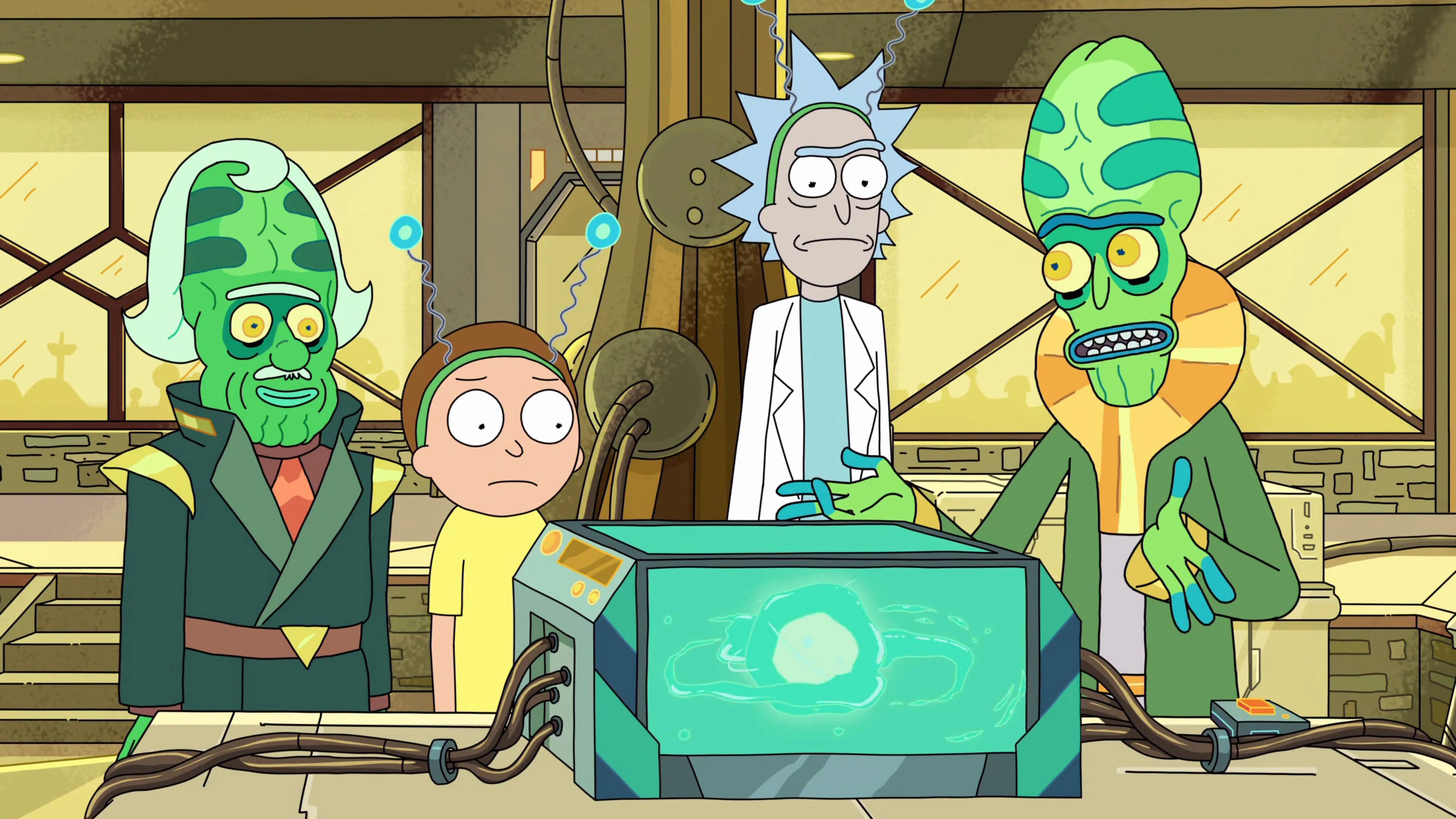
On a similar note, in our Godbound game, Evicting Epistle, we had a god of Artifice and Fertility. Since in that system you get more Dominion points each month based on the amount of people that worship your character, the simplest Goblin Brain solution was to make more followers. So the character went ahead and created a race of Units, smallest creatures capable of having a soul and producing worship, then putting them in a life-sustaining cell where they could worship them all day, every day for the rest of their lives. The cells were self-replicating too!

Rick and Morty's Microverse Battery, used as a literal prototype document for the Units' enclosure

I could be going on and on about more Goblin Brain examples, but I think you get the point by now...

Conclusions


When players come up with the most blunt, straightforward solution to a problem that would be appalling to a normal human being, you know they were thinking with their Goblin Brain. It can be fun to theorise, sometimes it can be fun to actually carry out, but keep in mind that a Goblin Brain might not be thematically fitting for all sorts of games.